


Every modern team wants to manage tasks better and finish projects faster. Finding the right productivity software can feel like a long search through many complex tools. You need a platform that matches your specific workflow without adding extra stress to your day.
Many managers start by looking at different ClickUp alternatives to see what works best for their unique goals. While many options exist, few provide the full set of features needed for real long-term growth. Choosing the right environment is essential for your team’s success and overall happiness.
This guide looks at popular choices to help you pick the best platform for your current needs. Understanding your options is the first step toward improving your daily work and hitting every deadline. You deserve a workspace that grows with you and keeps everyone on the same page.
Key Takeaways
- Identify the core features your team needs to stay organized every day.
- Compare top-rated tools to find the perfect fit for your specific budget.
- Learn why centralizing your data improves overall team speed and clarity.
- Discover how the right platform reduces time spent on boring manual tasks.
- Evaluate user interfaces to ensure your staff actually enjoys using the tool.
- Explore why flexibility is the most important factor in modern task management.
Understanding Your Project Management Needs
The quest for the perfect project management tool begins with a deep understanding of your team’s unique requirements. Different teams and organizations have distinct needs when it comes to managing projects and tasks.
For instance, a marketing team might require a tool that excels in task management and collaboration, while a software development team might need a tool that integrates well with their development environment and supports agile methodologies.
Understanding these needs involves considering several factors, including:
- The size and complexity of your projects
- The number of team members and stakeholders involved
- The specific features you need, such as Gantt charts, time tracking, or resource allocation
- The level of customization and flexibility required
As noted by project management expert, Harvey Mackay, “A good plan violently executed now is better than a perfect plan next week.” This underscores the importance of having a tool that can adapt to your team’s workflow and facilitate effective execution.

When evaluating project management tools, it’s essential to consider how they can cater to your team’s specific needs. This might involve assessing the tool’s ability to integrate with other software, its user interface, and its scalability.
By understanding your project management needs, you can make an informed decision when choosing a tool, ensuring that it enhances your team’s productivity and efficiency.
Top ClickUp Alternatives for Project Management
In the realm of project management, ClickUp has several alternatives that offer unique features and benefits. As teams grow and evolve, their project management needs often change, making it essential to explore other viable options.
Asana
Overview
Asana is a popular project management tool known for its simplicity and effectiveness in task management. It helps teams stay organized and on track with their projects.

- Task assignment and tracking
- Project timelines and workflows
- Reporting and dashboards
- Integration with various third-party apps
Pros
- Easy to use: Asana’s intuitive interface makes it accessible to teams of all sizes.
- Customizable: Asana allows teams to tailor workflows to their specific needs.
Cons
- Limited features in the free version
- Can become complex for very large projects
Monday.com

Overview
Monday.com is a versatile work operating system that enables teams to manage projects, workflows, and daily tasks in a highly visual and customizable way.
Key Features
- Customizable boards and workflows
- Automations and integrations
- Real-time tracking and reporting
- Collaboration tools
Pros
- Highly customizable: Monday.com offers a wide range of templates and customization options.
- Visual project management: Its board-based interface makes it easy to visualize project progress.
Cons
- Can be overwhelming due to its numerous features
- Cost can escalate with additional features and users
Both Asana and Monday.com are robust ClickUp alternatives that cater to different team collaboration needs. While Asana excels in task management simplicity, Monday.com offers a more comprehensive work operating system.
Best Visual and Collaborative Platforms
In the realm of project management, visual and collaborative tools are revolutionizing the way teams work together. These platforms are designed to enhance productivity and streamline workflows, making them indispensable for modern teams.
Notion
Overview
Notion is an all-in-one workspace that allows teams to create, collaborate, and organize their work in a highly customizable environment. It combines notes, tasks, databases, and calendars into a single platform, making it a powerful tool for workflow optimization.
Key Features
- Customizable templates: Notion offers a wide range of templates that can be tailored to fit specific project needs.
- Database creation: Teams can create databases to track and manage various aspects of their projects.
- Task management: Notion’s task management features allow for the assignment and tracking of tasks within projects.
Notion’s flexibility and customization capabilities make it a favorite among teams looking for a tailored productivity software solution. Its collaborative features enable real-time editing and commenting, enhancing team communication.
Cons
Despite its many benefits, Notion can be overwhelming for new users due to its vast array of features and customization options. Additionally, its offline capabilities are limited compared to some other productivity tools.
If you’re mainly deciding between Notion and ClickUp, check out my detailed Notion vs ClickUp comparison where I break down their features, pricing, and best use cases
Trello

Overview
Trello is a visual project management tool that uses boards, lists, and cards to organize tasks and projects. It’s known for its simplicity and ease of use, making it accessible to teams of all sizes.
Key Features
- Kanban boards: Trello’s Kanban boards provide a visual representation of project workflows.
- Card management: Cards can be used to represent tasks, with details such as descriptions, due dates, and attachments.
- Power-Ups: Trello’s Power-Ups integrate with third-party apps to extend its functionality.
Pros
Trello’s visual interface makes it easy for teams to understand project workflows at a glance. It’s also highly flexible, with the ability to adapt to various project management methodologies.
Cons
While Trello excels at simple project management, it can become cumbersome for complex projects that require more advanced features. Some users may also find the reliance on third-party Power-Ups for additional functionality to be a limitation.
Enterprise and Advanced Solutions
For enterprises seeking advanced project management capabilities, ClickUp alternatives like Wrike and Smartsheet offer robust solutions. These tools are designed to handle complex projects and provide advanced features that cater to the sophisticated needs of large organizations.
Wrike

Overview
Wrike is a powerful project management tool that offers advanced features for task management, team collaboration, and project tracking. It is designed to help enterprises manage complex projects and workflows efficiently.
- Advanced task management with dynamic workflows
- Real-time project tracking and reporting
- Customizable dashboards for different stakeholders
- Integration with various third-party applications
Pros
- Scalability: Wrike is highly scalable, making it suitable for large enterprises.
- Customization: Offers extensive customization options to fit specific business needs.
- Security: Provides robust security features to protect sensitive project data.
Cons
- Steep Learning Curve: Wrike’s advanced features can be complex to learn for new users.
- Cost: Can be expensive, especially for smaller teams or organizations.
Smartsheet

Overview
Smartsheet is a versatile task management and project management platform that combines the functionality of a spreadsheet with the power of project management tools. It is designed to help teams collaborate and manage projects more effectively.
Key Features
- Spreadsheet-like interface for easy data management
- Automated workflows and task assignments
- Resource allocation and tracking
- Integration with various Microsoft and third-party applications
Pros
- Ease of Use: Smartsheet’s familiar spreadsheet interface makes it easy to adopt.
- Collaboration: Enhances team collaboration with real-time updates and notifications.
- Flexibility: Offers flexible reporting and dashboard options.
Cons
- Limited Advanced Features: While robust, Smartsheet may lack some advanced features available in other tools.
- Cost: Pricing can add up, especially for larger teams or enterprises requiring advanced features.
Choosing the Right Tool for Your Team
The quest for the perfect project management tool involves evaluating various ClickUp alternatives to find the best fit for your team’s needs.
When selecting a project management tool, several factors come into play. Team size is a critical consideration, as different tools cater to different sizes of teams. For instance, smaller teams might prefer tools with simpler, more intuitive interfaces, while larger teams may require more complex features to manage multiple projects and workflows.
Project complexity is another vital factor. Teams handling complex projects with multiple dependencies and stakeholders may benefit from tools offering advanced features like Gantt charts, resource allocation, and detailed reporting.
Specific feature requirements also play a significant role. Some teams may prioritize collaboration features like real-time commenting and @mentions, while others may need robust time tracking and reporting capabilities.
To simplify the decision-making process, consider the following comparison of popular ClickUp alternatives:
| Tool | Team Size | Key Features |
|---|---|---|
| Asana | Small to Large Teams | Task management, workflow automation, reporting |
| Monday.com | Small to Enterprise Teams | Customizable workflows, project tracking, integrations |
| Notion | Small to Large Teams | All-in-one workspace, note-taking, project management |
By carefully evaluating these factors and comparing the features of different ClickUp alternatives, you can make an informed decision that meets your team’s unique needs and enhances your project management capabilities.
Why ClickUp Deserves Consideration
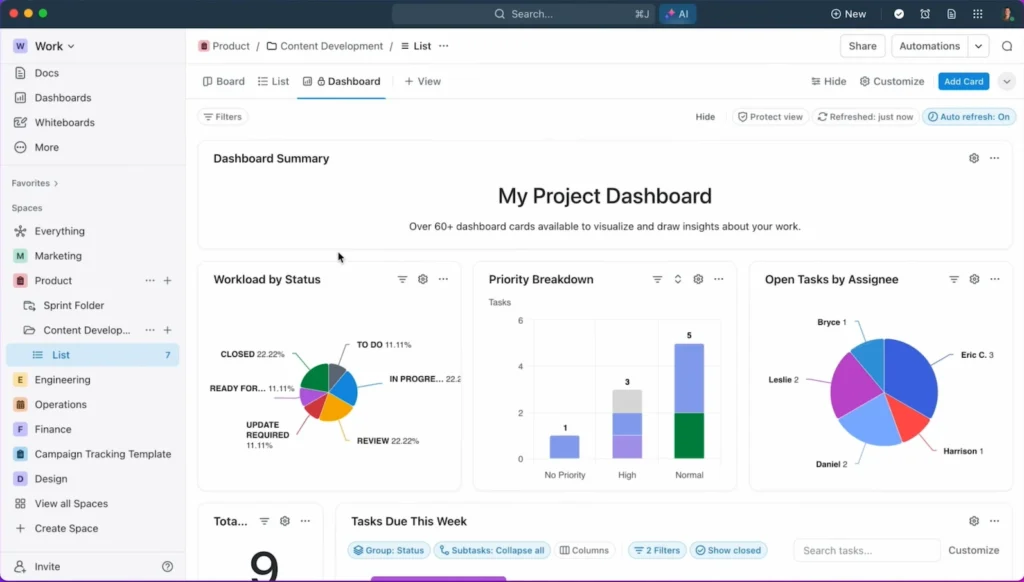
While exploring alternatives to ClickUp is essential, it’s equally important to understand why ClickUp remains a top contender in the productivity software landscape. ClickUp’s comprehensive suite of features, designed to enhance workflow optimization, makes it a compelling choice for teams of all sizes.
One of ClickUp’s standout features is its all-in-one task management capability, allowing teams to manage tasks, track time, and share documents within a single platform. This integration eliminates the need for multiple tools, thereby streamlining workflows and enhancing productivity.
ClickUp’s flexibility is another significant advantage. It offers a highly customizable platform that can be tailored to meet the specific needs of various teams and projects. Whether you’re managing a small team or a large enterprise, ClickUp’s adaptable framework ensures that you can configure the tool to suit your workflow requirements.
The benefits of using ClickUp extend beyond its feature set. By consolidating multiple functions into one platform, ClickUp helps reduce the complexity associated with using disparate tools. This consolidation not only saves time but also reduces the potential for errors that can occur when switching between different applications.
Key Features and Benefits of ClickUp
| Feature | Description | Benefit |
|---|---|---|
| Task Management | Manage tasks, set priorities, and assign responsibilities | Enhanced team collaboration and productivity |
| Time Tracking | Track time spent on tasks and projects | Improved project estimation and resource allocation |
| Document Sharing | Share documents and collaborate in real-time | Streamlined communication and reduced email clutter |
In conclusion, ClickUp is a powerful productivity software that offers a wide range of tools and features designed to optimize workflow and enhance team productivity. Its flexibility, customization options, and all-in-one task management capabilities make it a worthy consideration for teams looking to streamline their project management processes.
Before choosing an alternative, it’s worth checking out my full ClickUp review to see why many teams still consider it one of the most powerful project management tools available.
Conclusion

Selecting the right project management tool is crucial for team productivity and success. This article has explored various ClickUp alternatives, including Asana, Monday.com, Notion, Trello, Wrike, and Smartsheet, each offering unique features and benefits.
While considering ClickUp alternatives, it’s essential to assess your team’s specific project management needs. ClickUp remains a viable solution, offering a comprehensive set of features that cater to diverse project requirements.
By evaluating these project management tools, teams can make informed decisions and choose the best fit for their needs. Whether you opt for ClickUp or one of its alternatives, the key is to find a tool that enhances collaboration, streamlines workflows, and drives project success.